
Brandon J. Dirden Embraces the Unknown as Pozzo in Waiting For Godot


(Photo: Andy Henderson)
Before taking on the role of Pozzo in the Jamie Lloyd-directed production of Waiting for Godot on Broadway, Brandon J. Dirden had never performed in something so nontraditional. A veteran of the stage, Dirden's Broadway credits include portraying Martin Luther King, Jr. in the Tony-winning production of Robert Schenkkan's All the Way, Booster in the Tony-winning revival of August Wilson's Jitney and Reggie in Skeleton Crew. Onscreen, he's best known for his role as Agent Dennis Aderholt in FX’s The Americans. Rather than shy away from the challenge presented by Samuel Beckett's famously absurdist play, he dove right in. Trusting his collaborators, including Lloyd and co-stars Keanu Reeves, Alex Winter and Michael Patrick Thornton, was key. The actor spoke to Broadway.com about the power of language, taking on a role outside of his wheelhouse and, of course, what it's like sharing the stage with the Bill and Ted stars.
How familiar were you with the play before you got this role? I read that you’ve taught Beckett at NYU, but have you ever taught Waiting For Godot?
I have not taught this specific play. I teach a course in NYU’s Graduate Acting Program for first years on text analysis, and I try to do a sample of different styles of writing and playwrights. So I'll look at Beckett, August Wilson, Amy Herzog, Henrik Ibsen. For teaching Beckett, I bring in my dear friend Bill Irwin—maybe the world’s foremost Beckett interpreter—who I just adore beyond measure. He and I lead the class through Texts for Nothing, which are excerpts Beckett wrote; a study in a dissection of Beckett’s style. But I had never performed in this play or any Beckett play, so actually presenting this in front of an audience was all brand new to me.
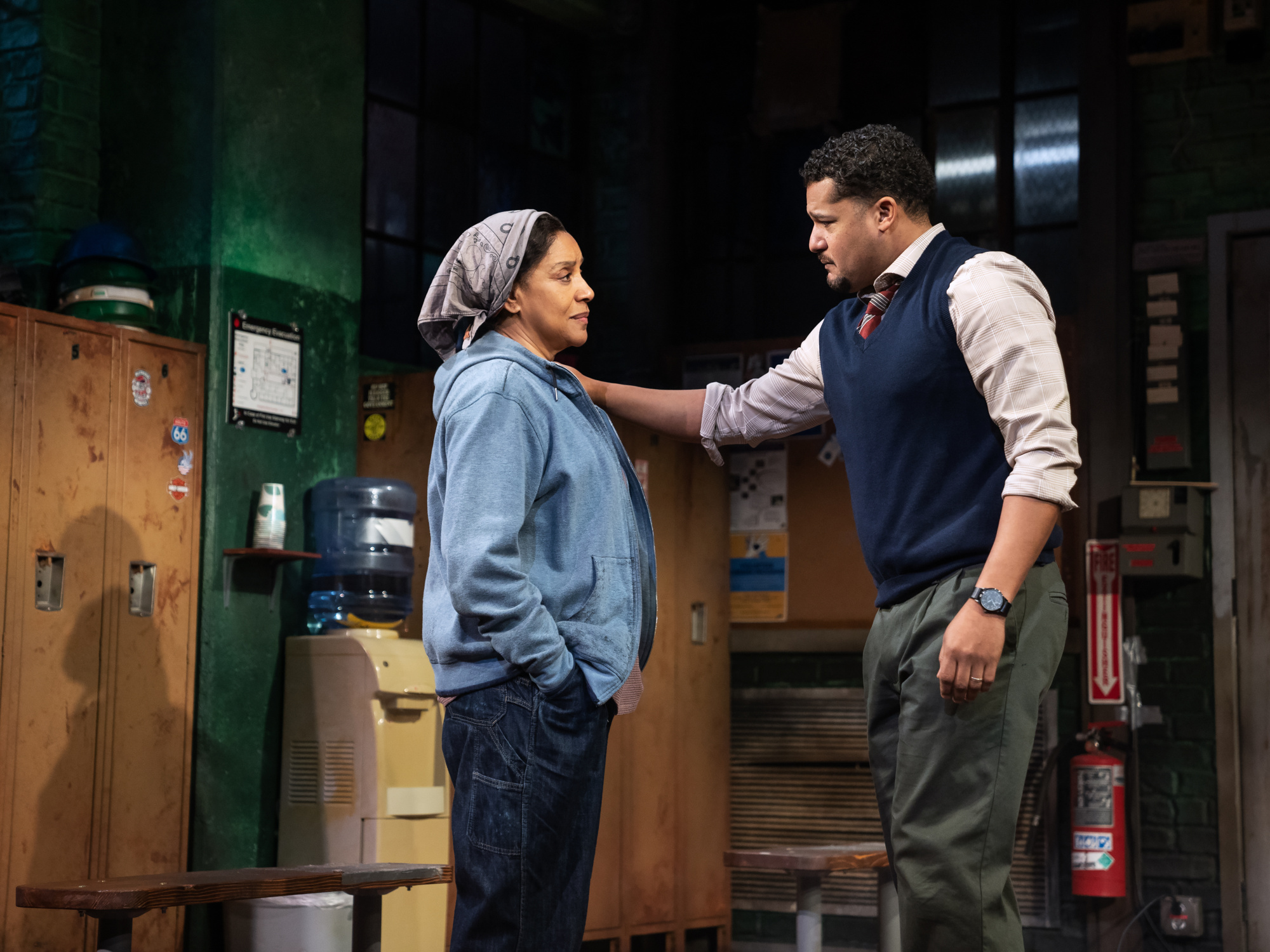
Can you speak more to the difference between reading a play and bringing it to life onstage?
I will say now, from both having performed Beckett and from an audience perspective, the difference between reading it and performing it is unlike any other playwright I’ve ever worked on. It is enough for the imagination, for the mental gymnastics, the pleasure of making sense of it for yourself. He tickles your brain and [you feel his writing] in your gut and your heart. But there is a physical component, sometimes it's downright slapstick, that you cannot approximate. The physical language is just as important and as visceral as the spoken language. He demands you unequivocally use your entire self in surprising ways that change from night to night. Every night before places, we all circle up backstage—Keanu, Alex, myself and Michael—just to check in with each other, because we understand how important it is for us to be on the same page. Last night in the circle, Keanu says, 'Guys, why do I feel like I've never done this play before?' It does feel like that every single night; like a new thing that wants to be birthed into the world. You can't plan for it. It’s really a shock to the system every single day, and it's exciting and it's exhausting. So the physical nature and sensation of it, you cannot understand just from reading it. I don't know what it is about this play that makes all actors feel that. I’ve talked to other actors who are now obsessed and say, 'I hate this play. I can't wait to do it again.'
How have you enjoyed the physical comedy and audience interaction in a role like this?
It’s very scary in a way. It's hard to describe, because there are moments in this play where, no spoilers, but the fourth wall does appear to be broken. But then, is it really broken? Have we not all been here the whole time? Or is that audience imagined? Or are we imagined? This play is really mind-bending. I'm directed to be faced out, so it becomes a very private experience. But it becomes this communal experience too. When you look out, you can't help but see a thousand people out there looking back at you, having a thousand individual experiences. It's just really an enigma. It’s scary, but enlivening and stimulating. You can't help but feel the connection to a very ancient, noble art form where we are playing make believe, yes, but hopefully offering a window into the soul of humanity.
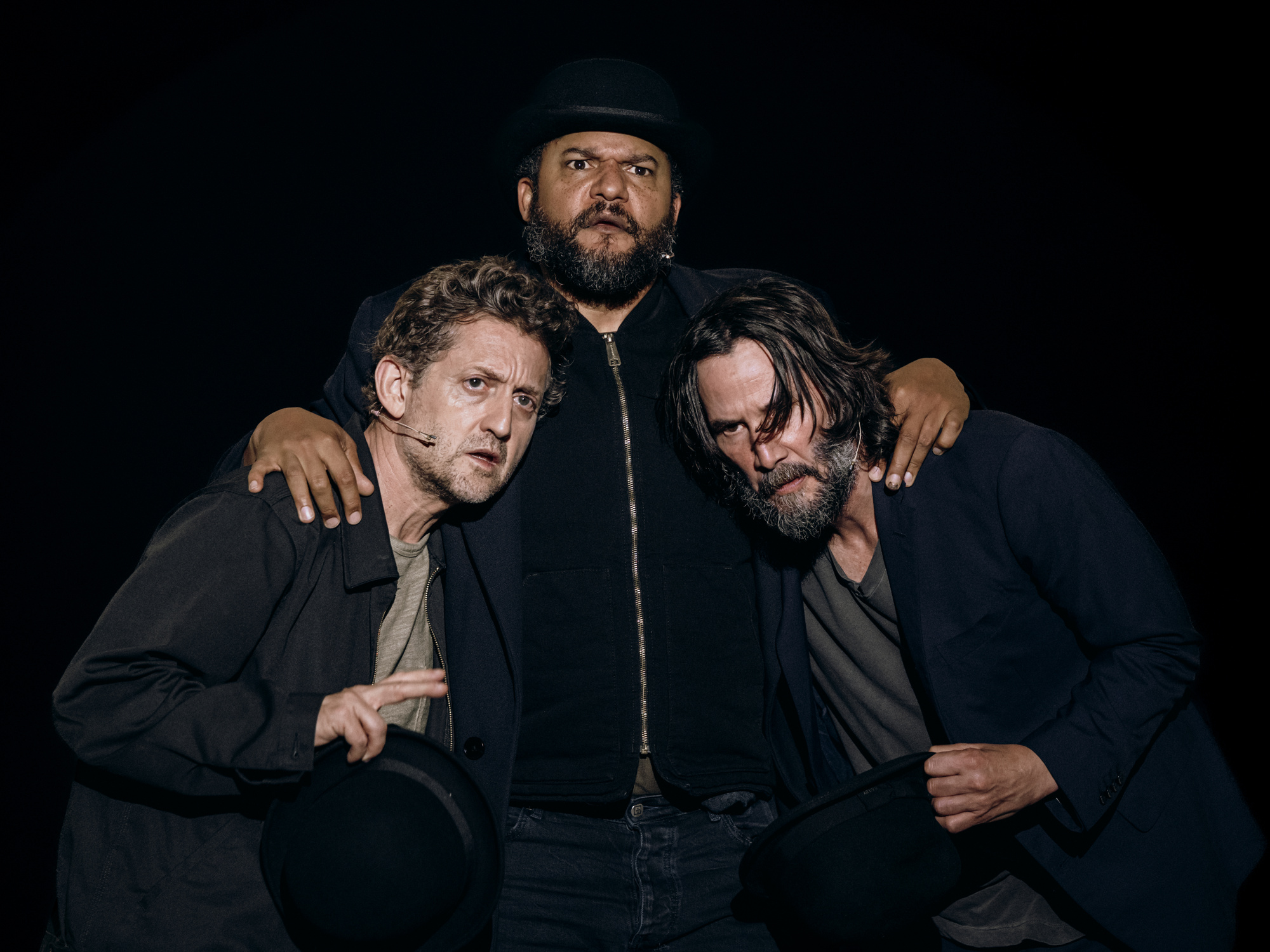
People say now is an important time to be putting on a show that makes you think like this. Do you think that’s true, or would you say its relevance is timeless?
It is timeless, but also timely. We are in a period of extreme confusion about what we can agree on as actual facts. What is real is up for debate and that has not existed in my lifetime. This play embraces a world where that is up for debate; what are the facts? But what this play also has at the core of it, that I hope audiences are able to lock into, is the idea that companionship is necessary. For our survival, our sanity, our existence. There are many things you can dispute, but what is indisputable is that we need each other. I think while this play will be relevant throughout any period of history, it is useful in our current time to remind us that the pandemic isn't so far in our rearview. We experienced massive amounts of isolation and existential crises. To be taken on this journey with these two couples in codependency, it is foundational to share with our audiences that we are in need of each other.
"There are many things you can dispute, but what is indisputable is that we need each other." —Brandon J. Dirden
What is it like working with Keanu Reeves and Alex Winter?
I didn't know Keanu and Alex prior to starting rehearsals for this show. It's been publicized that this was Keanu’s idea. It's kind of an epiphany he had in the middle of a jet-lagged evening, where he FaceTimed Alex at some ungodly hour and said, 'Me, you, Godot on Broadway.' It makes me profoundly proud of these gentlemen when you talk about using your platform. Keanu has been a movie star for four decades. He had a dream of being on Broadway and he could have picked any vehicle in the world. But [he chose] to commit to one of the most difficult, notoriously divisive plays—and to partner with a dear friend. It's remarkable that he took a big swing like that. I'm so honored and proud of the work that we put in, but also of the heart that is on display every day, from his generosity to signing autographs and meeting visitors. They are both impeccable role models. When the audition came up for this play, it was the same weekend that I lost my father. And my father, who was an actor as well, had actually played Pozzo in a community theater production in 1970. When my father passed, the word that I kept hearing over and over inside of me was integrity. My father was a man of integrity–in the way he raised his family and provided for us and put himself second so that we could have a chance of thriving in our dreams. You can love [this show], you can hate it, but from the inside, what I can unequivocally say is that it was built with integrity.
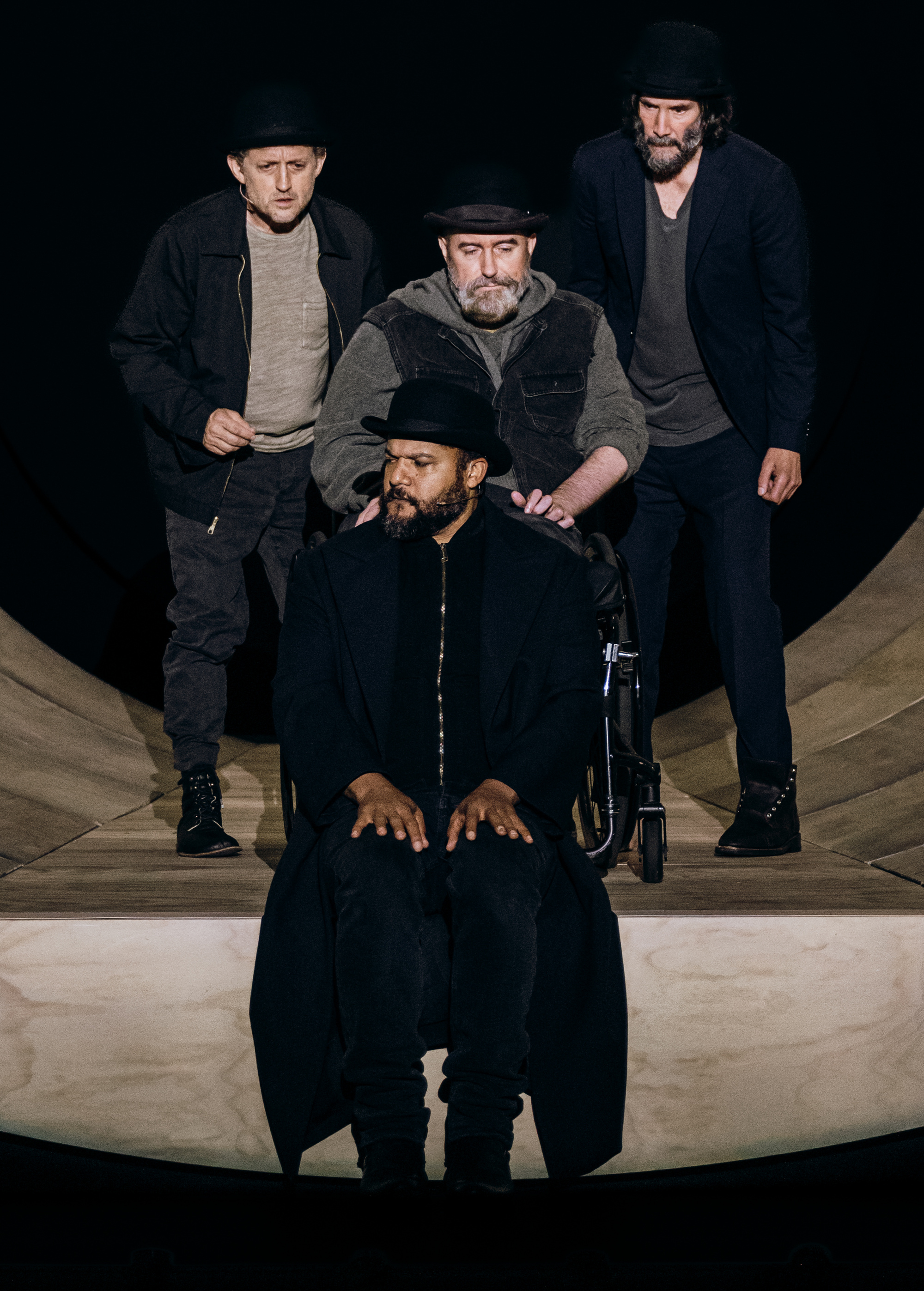
What about working closely with Michael Patrick Thornton?
I saw Michael for the first time live on stage in A Doll’s House and I thought it was absolutely remarkable. There was such an ease to his performance. There's also a touch of naughty. There's a twinkle in his eye. He’s my favorite kind of actor, because I fancy myself a bit naughty. I adore him. He’s a lot of fun to just hang out with, but also very well read and deeply serious about getting to the core of the business at hand and beyond in his willingness to to say, 'Let's just go for it. Let's not be careful.' With Michael being a wheelchair user, there are many things in the play Beckett has scripted that we cannot do. When I was offered the role, Michael had already signed on to play Lucky. I asked Jamie if he had any ideas on how the show would translate, and he said, 'I trust Michael implicitly. I believe Michael can do anything, and I trust that we will figure it out once we get there.' That spoke volumes to me about how much trust Jamie has put into his actors, even without knowing me. Just from the audition, I gathered that there was some malleability and some willingness to discover what it could be, not what it is, and I'm very proud of what we landed on as it continues to evolve every day. Working with Michael has been so educational in the sense of trust and diving in. I think he’s brilliant.
As a director yourself, what has your experience been like with Jamie Lloyd?
I was interested primarily in working with Jamie because it's not my style. I don't direct in the way he does. I'm at a point in my life where I've been so richly blessed to work with world class artists for many years now. I've learned so much, but I've never worked so closely with someone as avant-garde as Jamie Lloyd. Most of the theater that I make as an actor and director is traditional. It’s like learning a new, different sport. I'm curious to see how this will affect my artistry beyond this experience.
What do you think makes this specific production stand out?
To have a director like Jamie Lloyd who at heart is a minimalist, it’s quite intriguing to pair that with a play that is already quite thin. It’s the play where nothing happens twice, right? That's the famous tagline, and the set is famously sparse. So how do you get more minimal? Spoiler alert: what if we did it without props? You get a chance to take those obstacles and say, 'What is the opportunity in this?' We found delicious movement. What at first seemed architecturally interesting becomes quite useful in the storytelling of life being a slippery slope. Keanu journals a lot and on one of the pages of his journal, he writes down all of the names that have been given to the set, like the tunnel, the mouthpiece. It’s a list of probably 40 different monikers for the set.
It was recently announced that the show will be welcoming 500 NYC public school students in October. As an actor and an educator, what do you hope those students will gain from the show?
More than anything, I hope they take away the notion of the power of imagination. The very nature of the script, and particularly how we're presenting the story, hopefully gives the audience member agency to explore internally and have a deeper relationship with their own imagination. I think we have to have a world in which the imagination is free and engaged. They can see here that power is within the language. The ideas are enough.
Get tickets to Waiting for Godot!

